Developing Motor Co-ordination Skills from an Occupational Therapists perspective
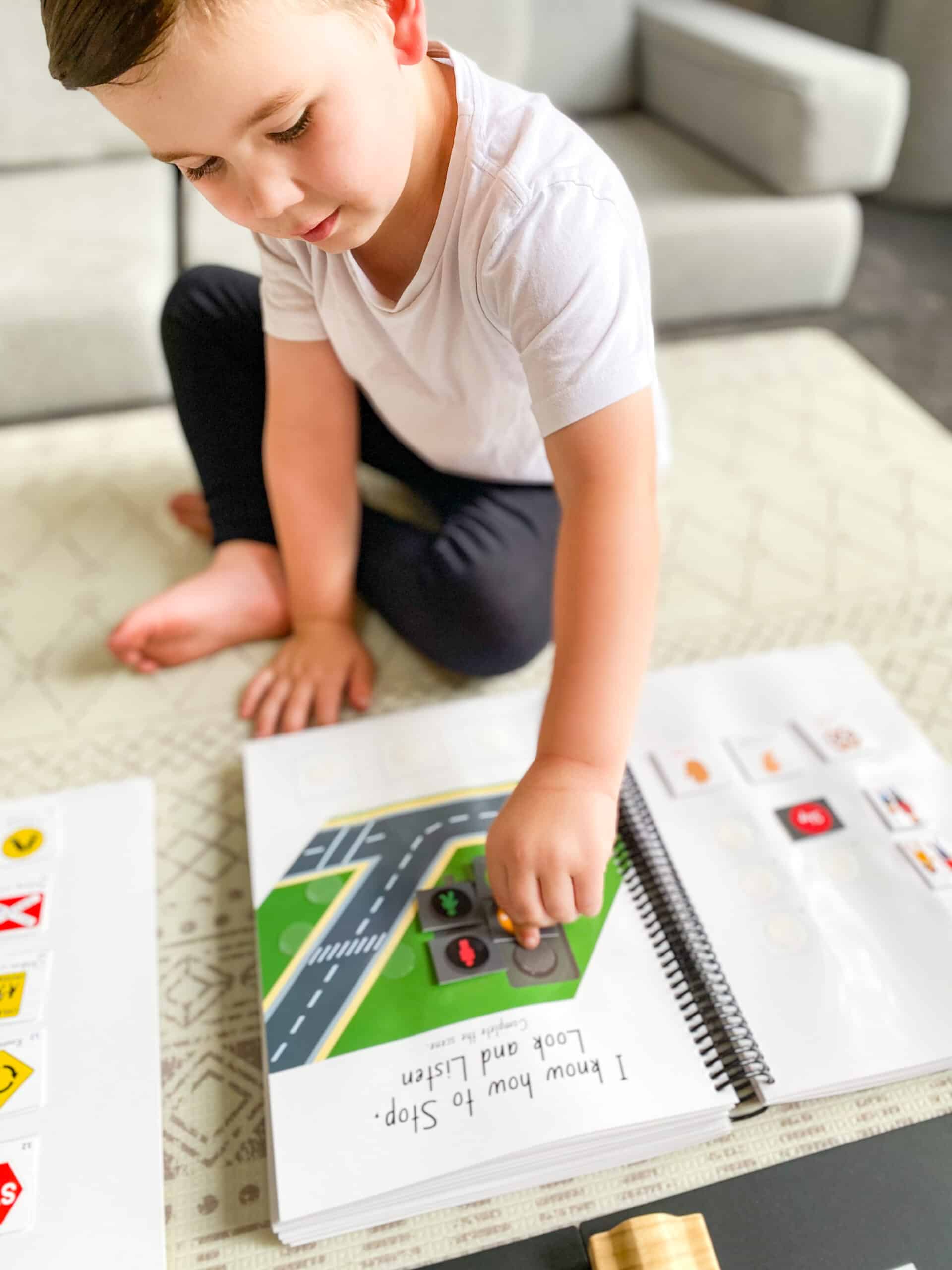
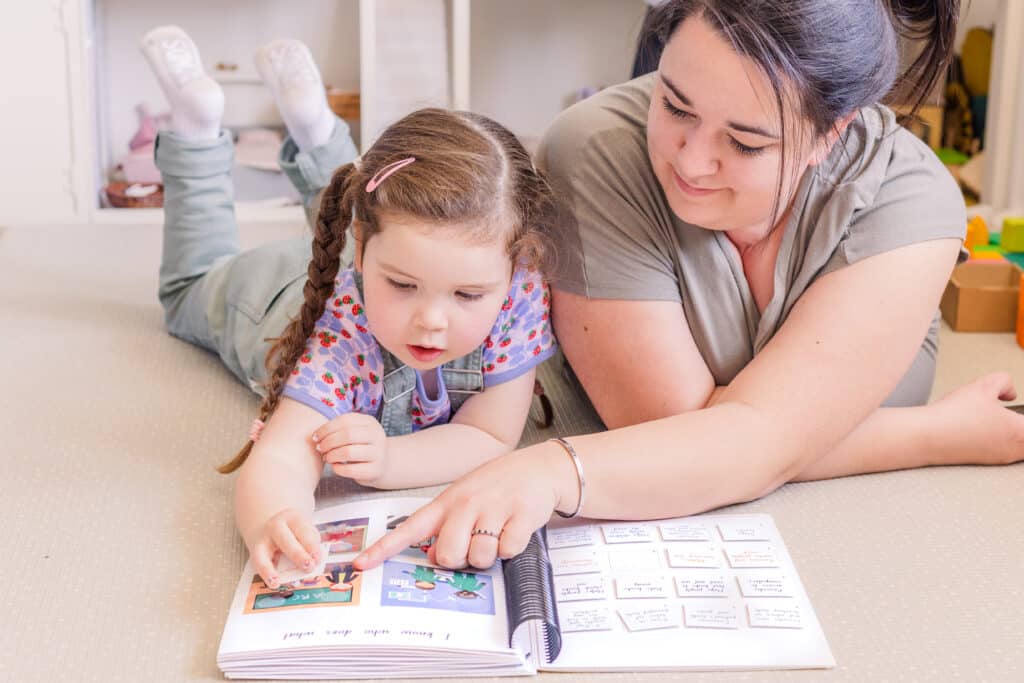
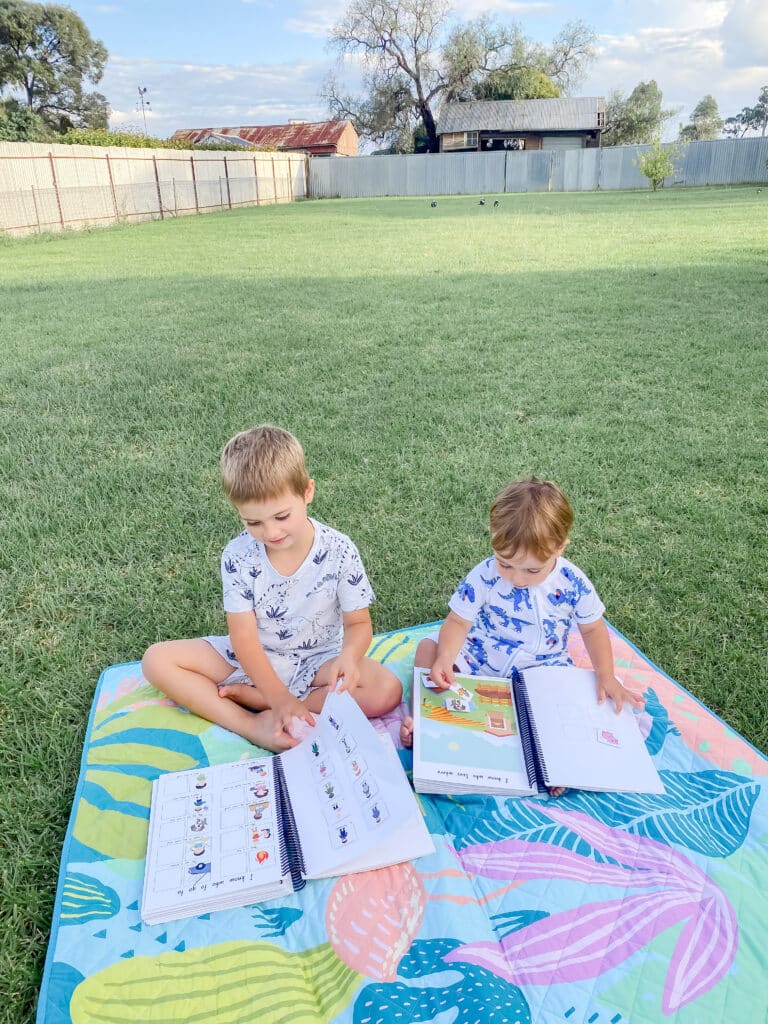
The activities in Busy Books help to develop motor coordination skills. Picking up a piece from the left page, moving it across to the right page. This also involves ‘crossing the midline’, an imaginary line down the middle of our bodies that divides it into left and right ???????? Crossing the midline incorporates core stability, trunk rotation, planning and sequencing, and bilateral integration.
When done with the dominant hand, crossing the midline gives the dominant hand chance to develop good fine motor skills. If a child avoids crossing the midline, then both hands get equal use and hand dominance may be delayed. Midline crossing difficulties can also make it difficult to visually track an object from side to side – meaning reading can also be delayed.
How to tell if your child has midline crossing difficulties:
???? Child gets ‘stuck’ mid reach and switches hands to continue
???? Child moves whole trunk to reach to the opposite side to compensate
???? Child uses left hand for activities on the left side of the body and right hand for those on the right side
???? Delayed hand dominance
Tips to improve midline crossing:
???? Fun no pressure Busy Book play is a good one for improving the midline crossing
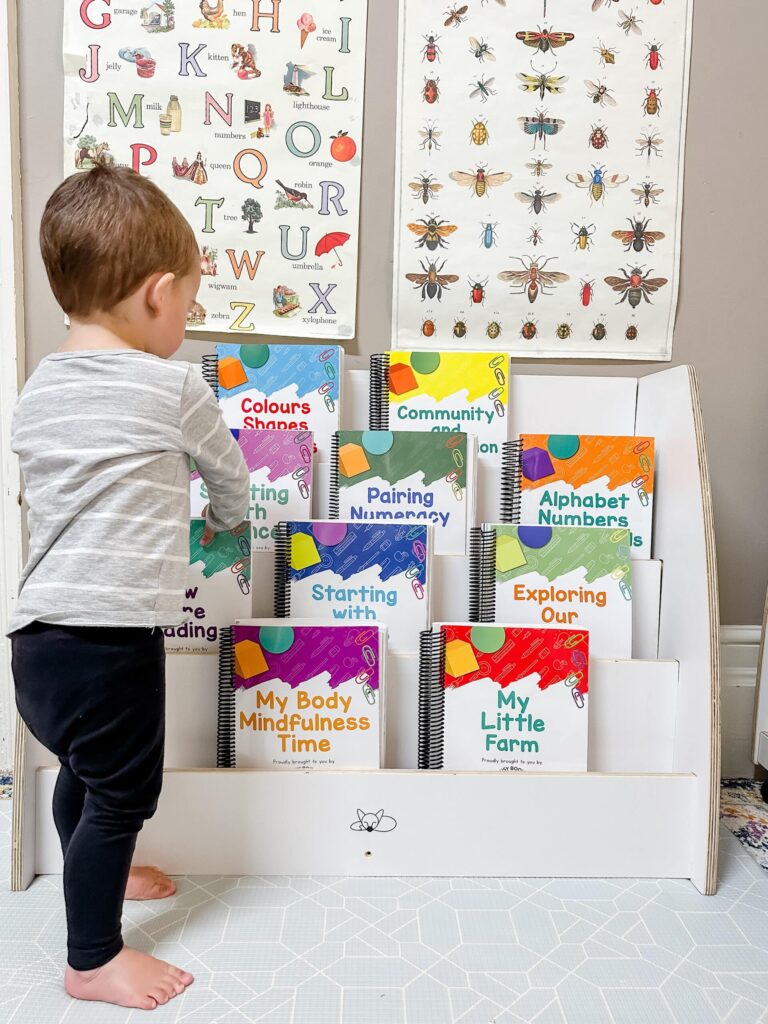
???? Work on core stability and trunk rotation – yoga is such a good one for this! – Check out the yoga activity in the My Body Mindfulness Time Busy Book
???? Craft activities – threading beads, cutting and pasting ✂️
???? Games such as Twister, Simon Says, and songs involving finger counting e.g. This Little Piggy, Five Fat Sausages
???? Stickers – place on the opposite hand/arm and encourage them to remove with the dominant hand
???? Daily living skills – place socks, shoes etc. on the ‘wrong side’ of the body when dressing so the child has to reach over ????”
Engaging your busy toddler or young child in learning can be a tricky thing. With short attention spans and eager to discover the next exciting adventure, capturing a child’s interest with quality educational resources can feel like you you are continuously chasing that pot of gold at the end of the rainbow. What if we […]
Neurodivergent children, autistic children and children with ADHD or ASD develop skills at a different rate than non-neurodivergent children. Even how they learn can be different, and they can experience challenges with social skills, processing information, sensory processing, communicating with others and other developmental delays. As a parent or teacher of neurodivergent children, autistic children […]
Every parent wants their child to succeed in life, reaching milestones and developing skills. Sometimes this may be a little slower than expected, such as development delays in the way a child moves, communicates, learns or even behaves with others. Whether you’re a parent or work with children, you can help children with developmental delays […]
Finding out your child is experiencing a communication or language delay can be disheartening. But with the right tools, you can give your child the best chance and opportunities to develop their verbal communication skills. Busy Books are one of these tools, with parents all over Australia thankful they took that step to help their […]
Busy Books are recommended by speech pathologists, occupational therapists, early childhood educators and paediatric specialists to help with childrens’ learning and development. There are activity books for children from 18 months and up, all the way through to the teenage years. The bright colours, fun characters and hands-on activities help keep kids interested and engaged […]